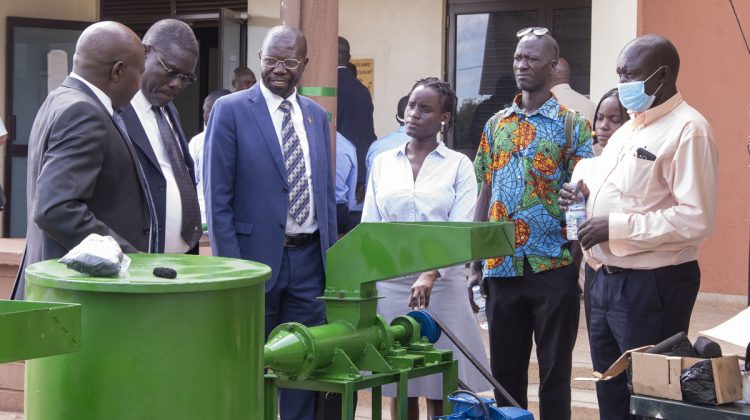
The project is investigating the potential of green charcoal in contributing to improvement of household livelihoods, increased quality in the value chain of green charcoal production, and climate change mitigation in northern Uganda.
A baseline study is being carried out to document the current and potential energy sources from wood fuel and their market distribution as fire wood, black charcoal, green charcoal as well as the variety of cook stoves in use.
The study will explore consumption practices and their effects on household livelihoods (income, health, access to education e.t.c). Aditionally, it will exploring the potential of green charcoal in mitigating climate change as a result of deforestation and forest degradation.
This study will be informed by Chambers and Conway (1991) framework/model on sustainable household livelihoods. Further, this pilot collaborative project will use
transition theories (multi-level perspectives, technological innovation system, etc) which focus on the interactions between niches, regimes and landscapes. This calls for the need to interpret the transition to low carbon sources (green charcoal) through performing interventions (Jorgensen, 2012).The project is being jointly conducted by teams from Gulu University’s Faculty of Business and Development Studies, Faculty of Agriculture and Environment, Faculty of Education and Humanities, and another team from the University of Aalborgin Denmark.
Research Teams
Gulu Team
- Nicholas G. Okello
- David Olanya
- Tabo Geoffrey
- Judith Awacorach
- Francis Atube
- Irene Akite
- Louis Labeja
Denmark Team
- Iben Jensen
- Hanan Lassen Zakaria
- Inger Lassen